


How to Identify Original Hand Embroidered Chikankari Kurtis

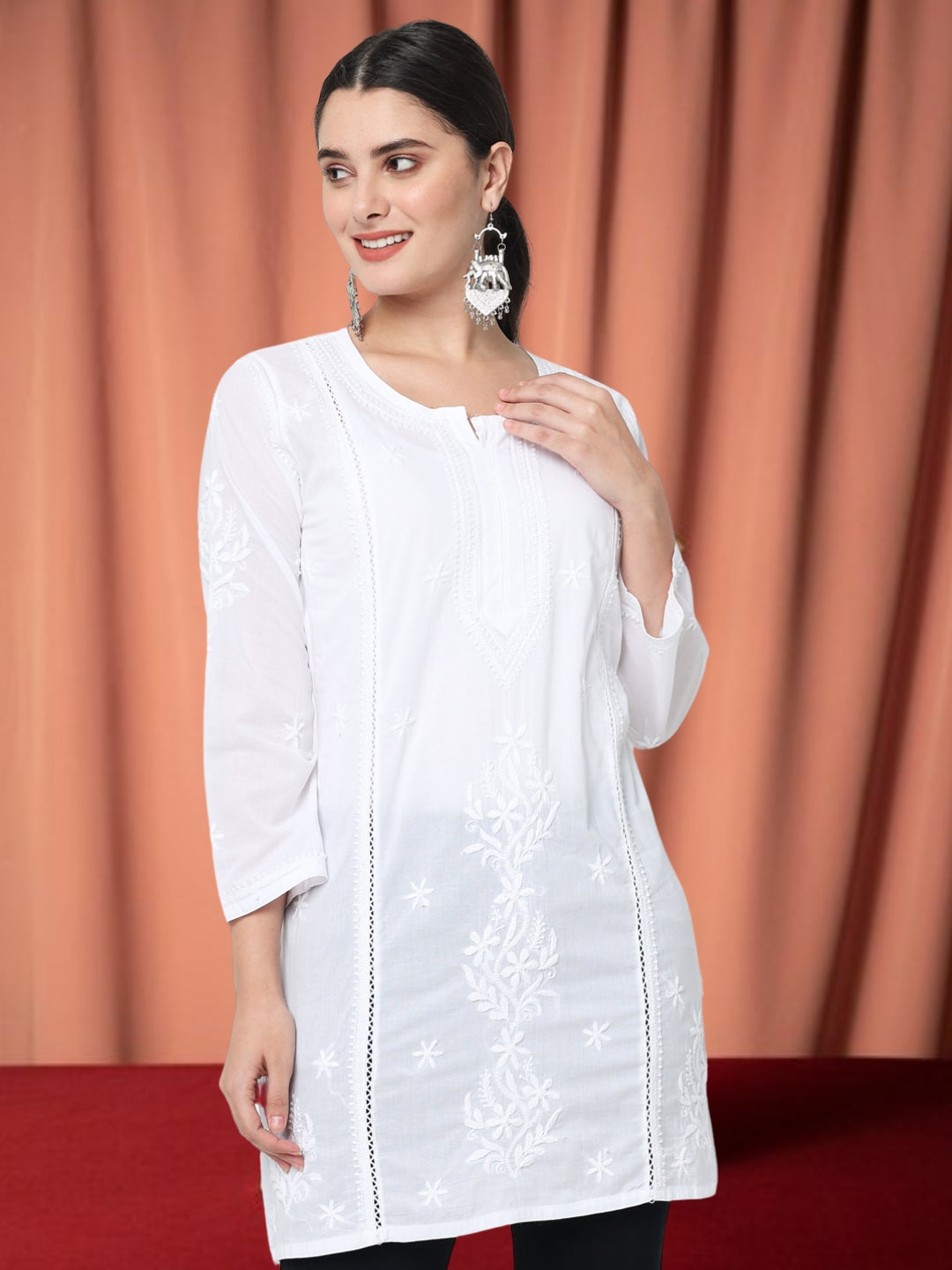
Chikankari is a timeless hand embroidery tradition from Lucknow, admired for its elegance and delicate craftsmanship. However, with machine-made and imitation Chikankari widely available today, it’s important to know how to identify original hand embroidered Chikankari kurtis before making a purchase.
This guide will help you confidently recognize authentic Chikankari and make informed buying decisions.
🧵 1. Feel the Embroidery Texture
Original hand embroidery always has texture and depth.
Check for:
-
Slightly raised stitches
-
Soft and breathable fabric feel
-
Natural irregularity in embroidery
❌ Machine embroidery feels flat, stiff, and overly uniform.
👗 2. Check the Back of the Fabric
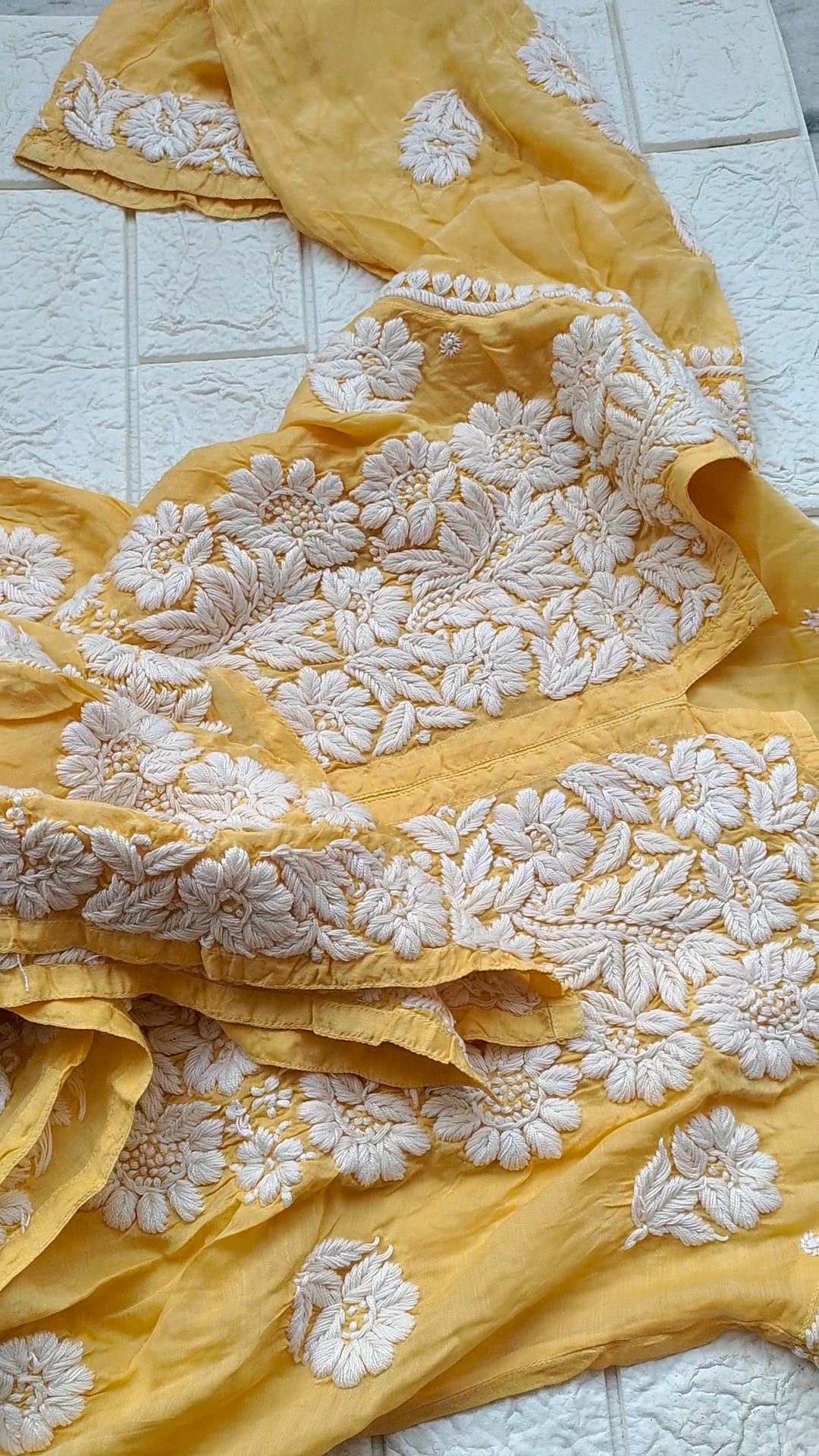
Turn the kurti inside out — this reveals the truth.
Hand embroidered Chikankari shows:
✔ Tiny knots
✔ Loose thread finishes
✔ Uneven stitch lengths
Machine embroidery shows:
✘ Clean, flat reverse
✘ No knots
✘ Perfect symmetry
✨ 3. Imperfection Is a Sign of Authenticity
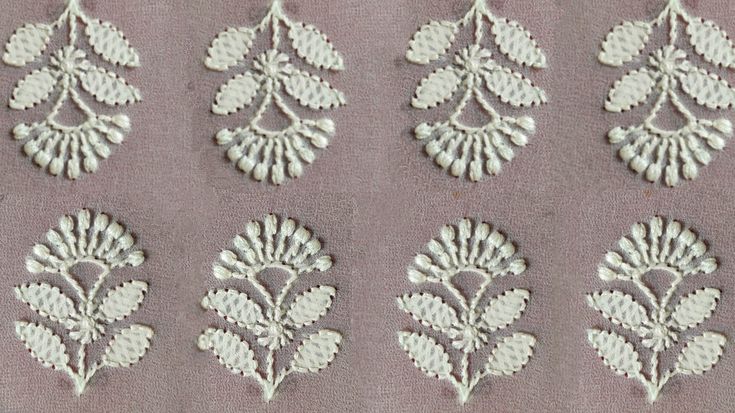
Handcrafted Chikankari is never perfectly identical.
-
Minor stitch variations = handmade
-
Repeated, identical motifs = machine-made
The charm of Chikankari lies in its handcrafted imperfections.
🪡 4. Identify Traditional Chikankari Stitches
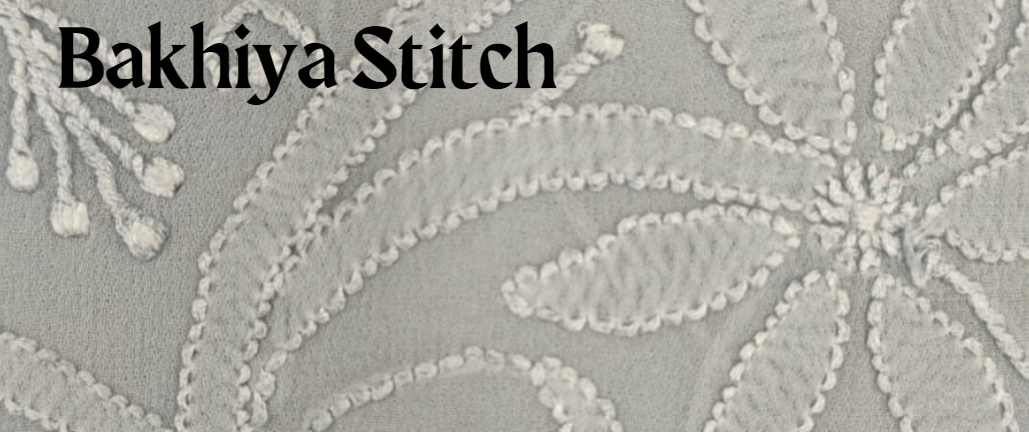
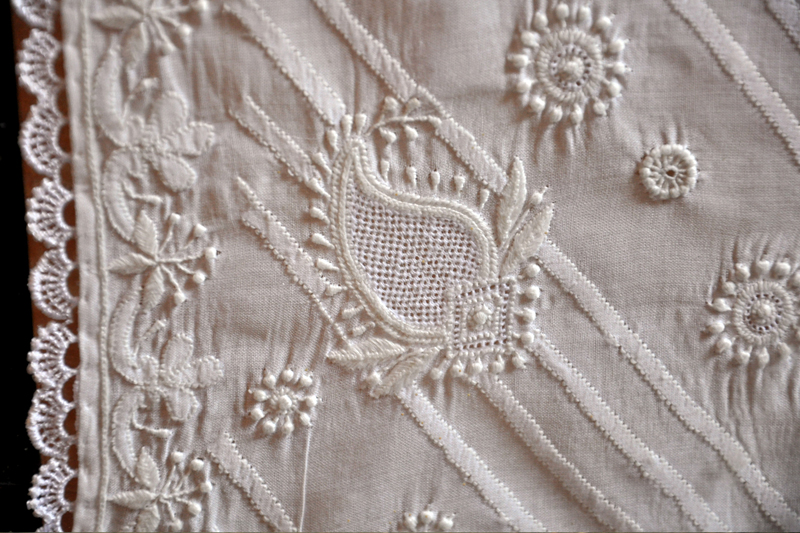
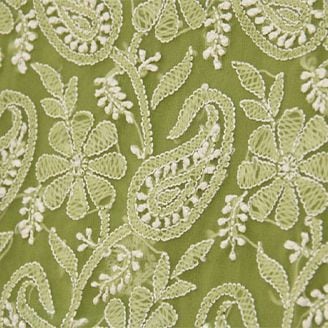
Authentic Chikankari includes traditional stitches such as:
-
Bakhiya (shadow stitch)
-
Phanda (knot stitch)
-
Murri (rice-shaped stitch)
-
Keel Kangan
-
Taipchi
Printed designs or flat thread work are not genuine hand embroidery.
🌿 5. Observe the Fabric Quality
Original Chikankari is usually embroidered on:
-
Cotton
-
Mulmul
-
Chanderi
-
Kota Doria
Synthetic or shiny fabrics are often paired with machine embroidery.
💰 6. Price Reflects Craftsmanship
Hand embroidery takes time and skill.
If a heavily embroidered kurti is priced extremely low, it is likely:
-
Machine embroidered
-
Mass-produced
-
Printed imitation
Authentic Chikankari supports artisan livelihoods and traditional craft.
📦 7. Check Product Details Carefully
Before buying, always look for:
-
“Hand Embroidered” clearly mentioned
-
Origin details (Lucknow)
-
Return or exchange policy
-
Genuine customer reviews
Reliable sellers are transparent about their craft.
🔍 8. Ask for Close-Up Images When Shopping Online

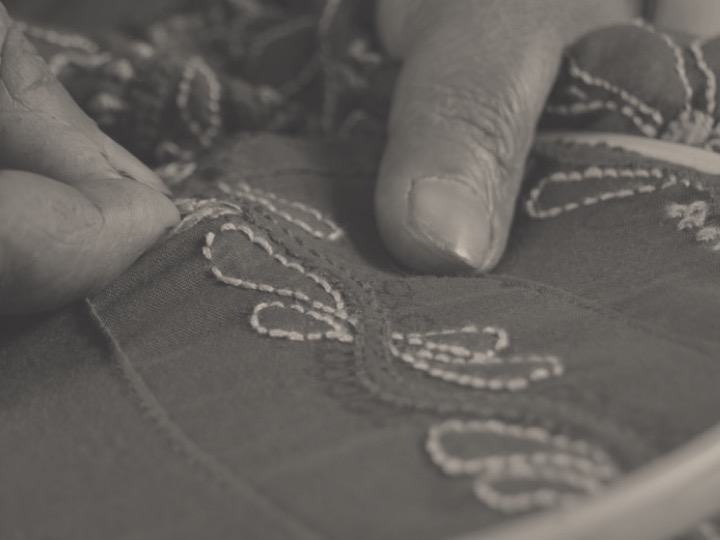
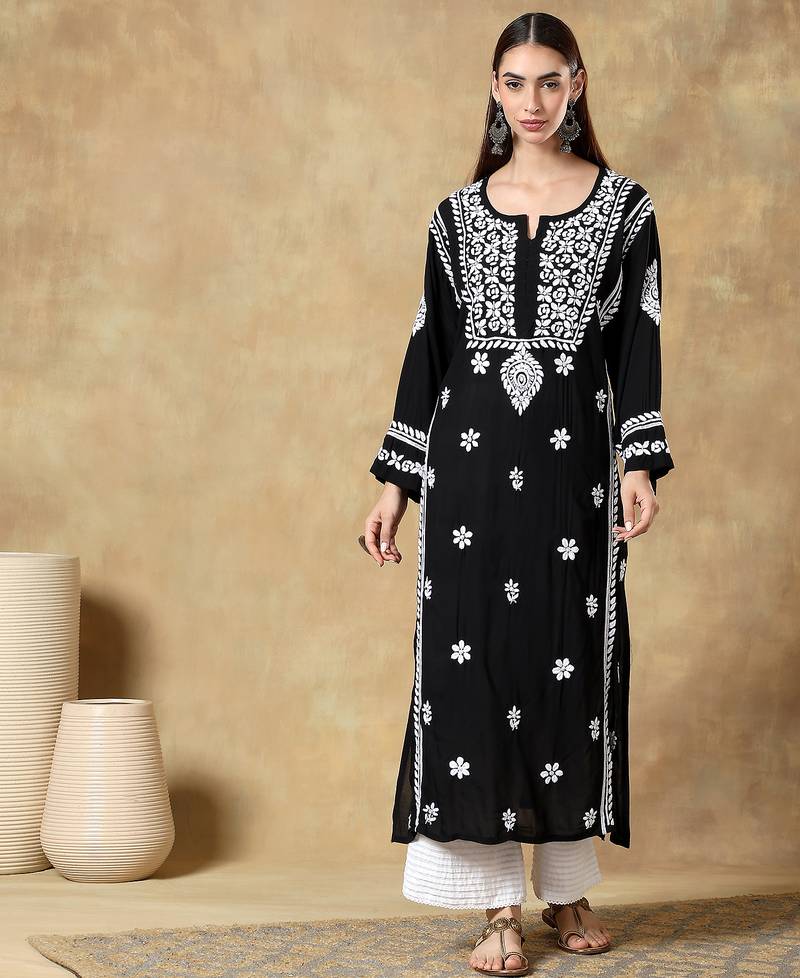
Zoomed images help identify:
-
Thread depth
-
Stitch shadows
-
Handcrafted texture
Flat and overly smooth embroidery usually indicates machine work.
❤️ 9. Why Buying Authentic Chikankari Matters
Choosing original hand embroidered Chikankari means:
-
Supporting skilled artisans
-
Preserving Indian heritage
-
Investing in sustainable fashion
It’s more than clothing — it’s a living craft.
✨ Final Thoughts
Once you understand what to look for, identifying original hand embroidered Chikankari kurtis becomes easy. Texture, stitches, fabric, and finish tell the real story.
Choose authentic. Choose handcrafted. Choose timeless.